Architecture · Urbanism · Philosophy

Originated by Mohammad Habib Reza

New Contextualism

Understanding Context.Reimagining Futures.

An architectural and urban design philosophy exploring the relationships between people, place, history, culture, ecology, and the built environment.

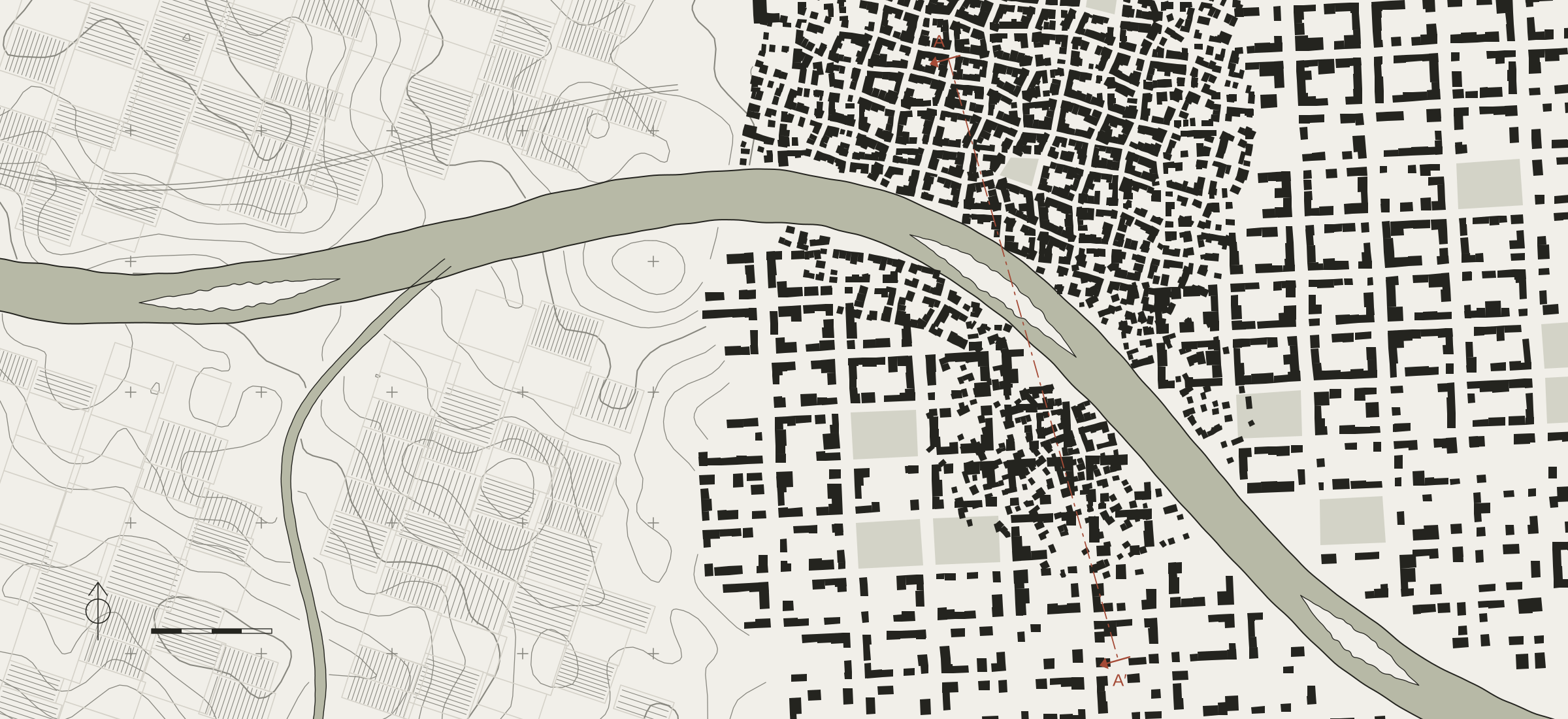
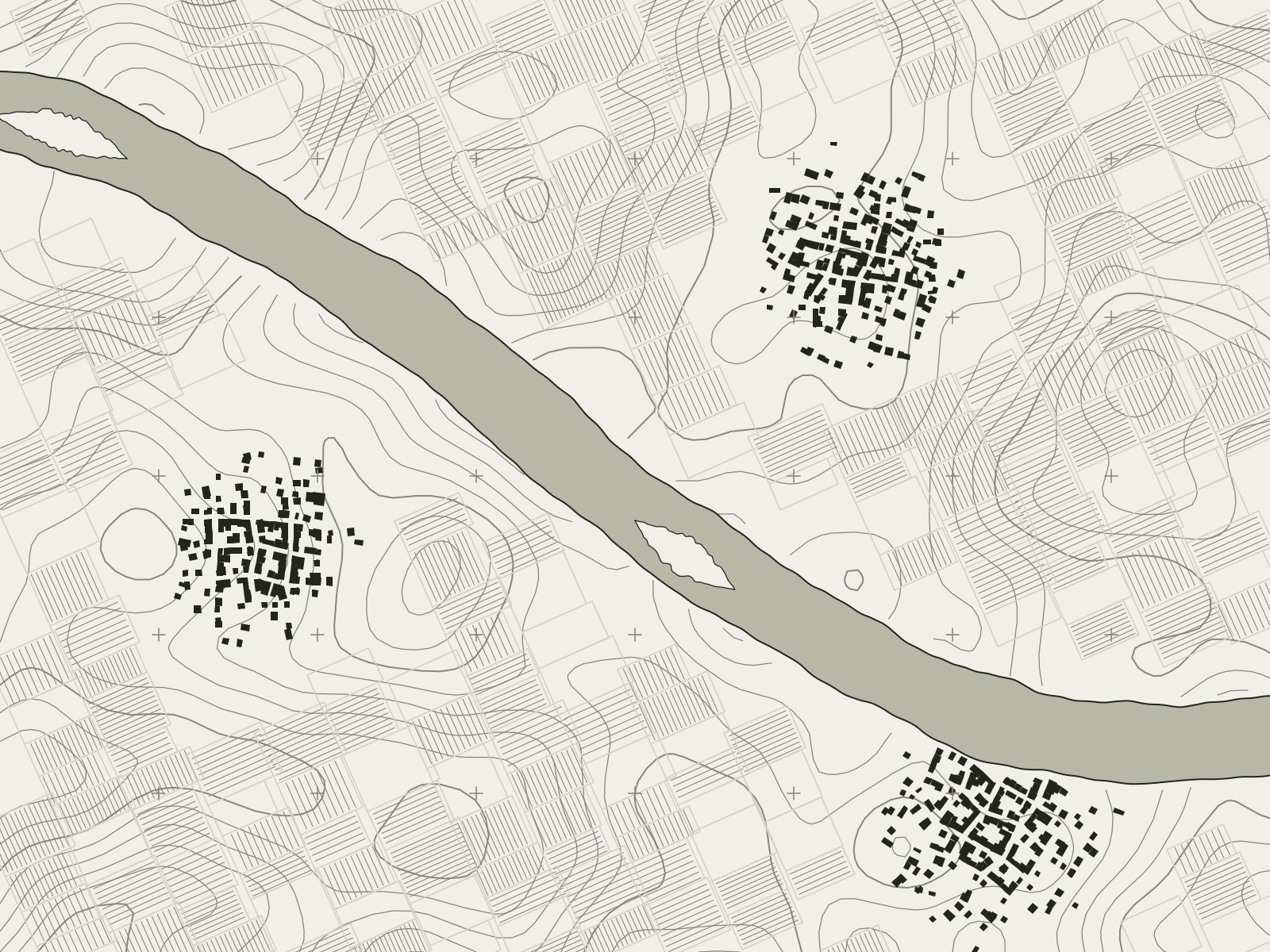
An abstract figure–ground drawing: a meandering river with sandbar islands crosses a landscape of paddy fields and contours; on its banks, a dense, irregular old settlement gives way to a planned grid. A red section line cuts across the city.
Plate I Settlement, water and terrain. An abstract figure–ground study, drawn for this platform; it does not represent a real site.

Context is more than what surrounds us.

Every place is shaped by visible and invisible forces. Histories, social relationships, cultural practices, ecological processes, political structures, and everyday life contribute to the meaning of the built environment.

New Contextualism approaches architecture and urbanism through these interconnected conditions, seeking a deeper understanding of place and the possibilities for meaningful transformation.

Editorial summary Awaiting the founder’s approval

‘Context, in the New Contextualist framework, transcends the immediate physical site.’

Mohammad Habib Reza The Daily Star Reza 2025
Read the philosophy

Ten dimensions. Interconnected realities.

The founder’s writing describes context as a ‘tenfold matrix’ of overlapping dimensions. None is read alone: each is entangled with the others, and every project weighs them differently.

Dimensions and their terms from Reza 2025. The relations traced here are an editorial interpretation.

  1. 01 Social community structures, demographics, lifestyles Related most directly to Economic, Political, Historical, Cultural, Urban.
  2. 02 Economic livelihoods, industries, affordability Related most directly to Social, Political, Cultural, Urban.
  3. 03 Political governance, patronage, regulations Related most directly to Social, Economic, Historical, Ecological, Urban.
  4. 04 Historical layers of development, memory, significance Related most directly to Social, Political, Scientific and Technological, Geographical, Cultural, Urban, Architectural.
  5. 05 Ecological climate, topography, biodiversity, resources Related most directly to Political, Scientific and Technological, Geographical, Urban, Architectural.
  6. 06 Scientific and Technological material properties, technological possibilities Related most directly to Historical, Ecological, Urban, Architectural.
  7. 07 Geographical location, connectivity, regional influences Related most directly to Historical, Ecological, Cultural, Urban.
  8. 08 Cultural traditions, beliefs, aesthetics, rituals Related most directly to Social, Economic, Historical, Geographical, Architectural.
  9. 09 Urban density, infrastructure, public space Related most directly to Social, Economic, Political, Historical, Ecological, Scientific and Technological, Geographical, Architectural.
  10. 10 Architectural typologies, styles, precedents Related most directly to Historical, Ecological, Scientific and Technological, Cultural, Urban.

Explore the contextual diagram


Thinking through places.

Theses, studio projects and competition entries in which the framework has been applied, documented from published sources. The drawings that accompany them are abstract editorial plates, not drawings of the projects.

  • Completed project 0
  • Ongoing research 2
  • Conceptual proposal 7

No built works have yet been documented on this platform.

All projects and research


An evolving architectural philosophy.

New Contextualism was originated by Mohammad Habib Reza, an architect, architectural historian and Associate Professor at the School of Architecture and Design, BRAC University, Dhaka.

In his account, the approach grew from early work as an architect-planner for the Barisal City Corporation and from doctoral research on the early Buddhist architecture of Bengal, and has been developed over more than a decade in teaching at BRAC University (Reza 2023b; Reza 2025).

Editorial summary Awaiting the founder’s approval Compiled from published sources


An ongoing conversation.

Essays, lectures and reports that make up the published record of New Contextualism, alongside the founder’s earlier scholarship. Every record has a persistent address and a full citation.

16 records · 7 types · 2008–2025

  1. 2025
    Essay Reza and Nitu 2025
    Source ↗
  2. 2025
    Essay Reza 2025
    Source ↗
  3. 2023
    New contextualism: A path to a sustainable and equitable future

    Mohammad Habib Reza The Business Standard

    Essay Reza 2023b
    Source ↗
  4. 2023
    Report BRAC University 2023
    Source ↗
  5. 2023
    Report Arch-Bangla 2023
    Source ↗

Browse the full archive, with filters


Context crosses disciplines.

New Contextualism has developed through design studios, workshops, lectures and symposia, and through exchange between practice and academia.

This platform is intended as a place for that dialogue to continue, across disciplines and between local conditions and wider systems. It is not a membership organisation; the ways to take part are set out below.

Proposed statement Awaiting the founder’s approval

Search the platform